Top Resume Skills Section Examples That Pass ATS Screening
By Muhammad Abdullah · November 4, 2026
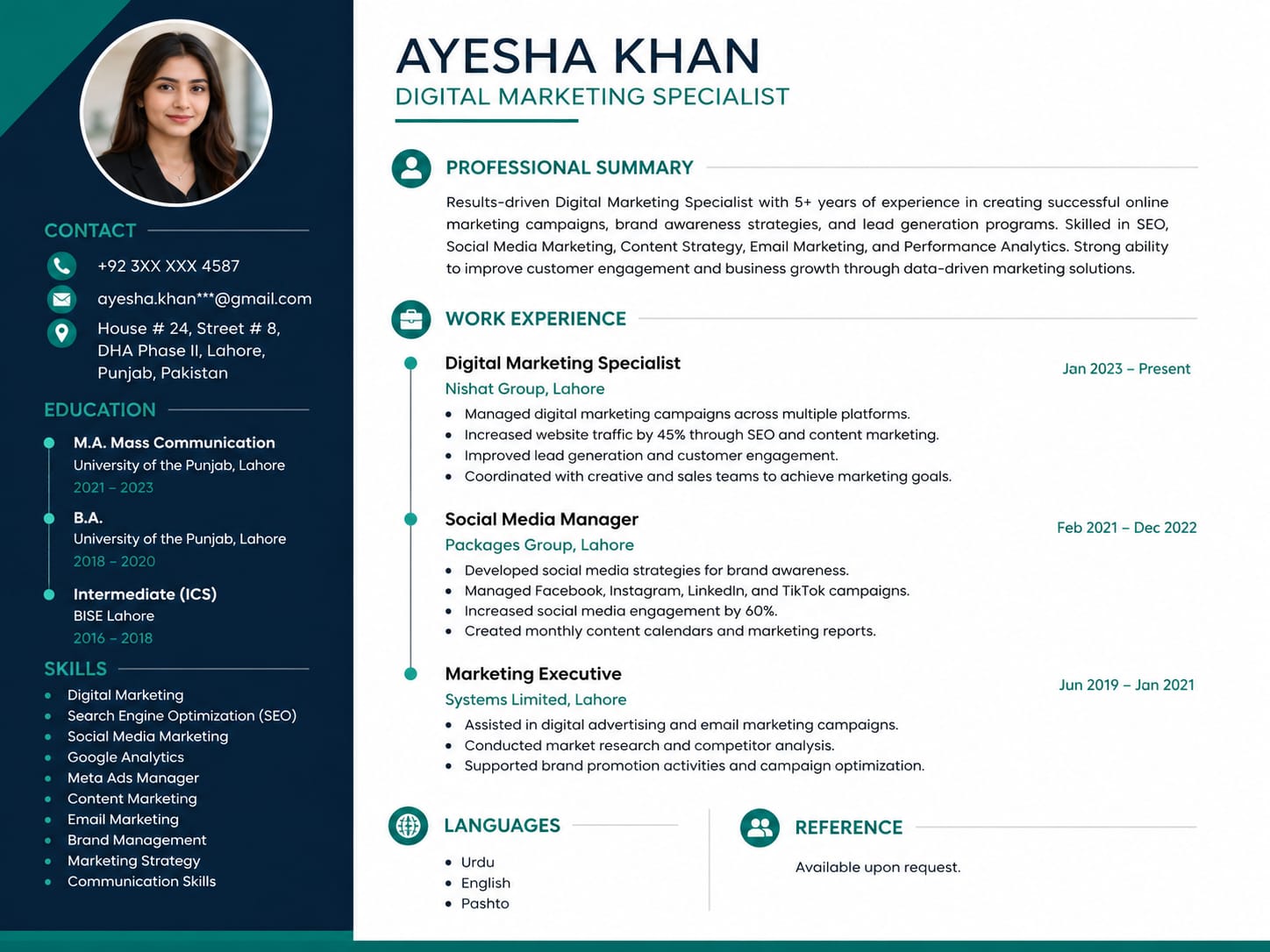
Building an impactful resume requires displaying your qualifications clearly, and reviewing proven resume skills section examples is the fastest way to learn how to structure this key area. Your skills section must immediately prove to both Applicant Tracking Systems (ATS) and hiring managers that you possess the exact technical expertise and personal traits required for the job.
As a professional CV writer helping job seekers across Pakistan, the UAE, and global remote markets, I consistently see strong candidates get passed over simply because their skills are listed vaguely. Whether you are applying for a software engineering role in Dubai, a marketing manager position in Lahore, or a remote ecommerce specialist spot, tailoring this section with precision can double your interview callbacks.
What Makes a Resume Skills Section Stand Out to Recruiters?
Recruiters spend an average of six to seven seconds on an initial resume screen. During those crucial seconds, their eyes scan for key technical proficiencies, specialized software tools, and core competencies relevant to the open position. A standalone, clearly formatted skills section acts as an instant snapshot of your overall value proposition.
Furthermore, modern recruitment relies heavily on ATS algorithms that score applicants based on keyword matches between the job description and the submitted CV. If a job posting lists terms like "Shopify Store Management," "Google Analytics 4," and "Conversion Optimization," placing these exact phrases neatly inside your skills section ensures your resume clears automated filters and lands on human desks.
Hard Skills vs. Soft Skills: Striking the Perfect Balance
To craft a convincing resume, you must understand the distinction between hard skills and soft skills. Hard skills are quantifiable, teachable technical abilities such as Python programming, financial auditing, or search engine optimization. Soft skills represent interpersonal attributes like leadership, cross-cultural communication, critical thinking, and negotiation.
While hard skills prove you can execute core job responsibilities, soft skills demonstrate how effectively you will collaborate within a team. For instance, a finance professional in Karachi competing for UAE corporate roles needs advanced financial modeling (hard skill) alongside executive stakeholder management (soft skill). The ideal resume skills section presents a balanced combination, prioritizing industry-specific hard skills while highlighting key professional traits.
Industry-Specific Resume Skills Section Examples
To help you structure your own CV effectively, here are concrete resume skills section examples categorized across high-demand sectors:
1. Information Technology & Software Development: • Technical Hard Skills: React.js, Node.js, Python, AWS Cloud Infrastructure, RESTful APIs, Git, PostgreSQL. • Core Soft Skills: Agile Methodologies, Systems Thinking, Technical Problem Solving, Cross-Functional Leadership.
2. E-Commerce & Digital Marketing: • Technical Hard Skills: Shopify Store Optimization, Technical SEO, Meta Ads Manager, Google Analytics 4, Klaviyo Email Automation. • Core Soft Skills: Data-Driven Decision Making, Creative Strategy, Campaign Execution, Trend Analysis.
3. Finance, Accounting & Corporate Banking: • Technical Hard Skills: Financial Modeling, IFRS Compliance, SAP ERP, QuickBooks Online, Tax Audit Preparation, Budget Forecasting. • Core Soft Skills: Analytical Precision, Strategic Risk Management, Executive Presentation, Ethical Governance.
4. Project Management & Operations: • Technical Hard Skills: PMP Frameworks, Jira & Asana Administration, Supply Chain Logistics, Vendor Negotiations, Process Automation. • Core Soft Skills: Change Management, Conflict Resolution, Team Leadership, Resource Optimization.
How Should You Format Your Resume Skills Section?
Structure matters just as much as content. When formatting your skills section, clarity must take priority over decorative design elements. Avoid using visual progress bars, percentage scales, or star ratings. ATS tools cannot parse visual graphics, and recruiters find arbitrary self-ratings like "4 out of 5 stars in communication" unconvincing and subjective.
Instead, organize your skills into clean, bulleted categories. Grouping your capabilities under subheadings like "Technical Proficiencies," "Core Competencies," and "Tools & Platforms" makes your resume effortless to skim for human hiring managers while preserving complete ATS readabilities.
Checklist for an High-Impact Resume Skills Section
- Tailor your listed skills directly to the keyword phrasing in the job description.
- Group your skills into distinct categories rather than one long, unstructured list.
- Prioritize hard, technical skills while selectively including high-value soft skills.
- Eliminate outdated or basic entries like "Microsoft Word" or "Internet Searching."
- Limit your skills section to 10 to 15 highly relevant items to avoid visual clutter.
- Back up your listed skills with quantified achievements in your work experience section.
Tailoring Skills for Gulf (UAE/KSA) and Pakistani Job Markets
Job seekers in Pakistan targeting local corporate positions or high-growth markets in the UAE and Saudi Arabia must adjust their skill presentation to match regional priorities. Gulf employers place heavy emphasis on enterprise software knowledge (such as SAP or Oracle ERP), international compliance standards, multi-currency financial oversight, and bilingual capabilities (English and Arabic).
For Pakistani professionals aiming for remote international roles in the US, UK, or European markets, emphasize asynchronous communication tools (Slack, Loom, Notion), self-management, dynamic problem-solving, and international tech standards. Aligning your skills section with market expectations gives you a decisive advantage over applicants submitting standardized, generic templates.
Frequently Asked Questions About Resume Skills Sections
How many skills should I include in my resume skills section? You should aim to include 10 to 15 highly relevant skills on your resume. Including too many skills dilutes the focus of your CV and can make you look like a generalist rather than a specialist. Quality and direct job alignment matter much more than sheer length.
Should I place the skills section near the top or bottom of my resume? If you are an experienced professional or possess specialized technical credentials, place your skills section near the top, right below your professional summary. If your career relies heavily on chronological work history, placing it on the side margin or immediately after your experience section works equally well.
How do I select the right skills when planning a career change? When changing careers, focus heavily on transferable skills—abilities that are valuable across multiple industries, such as project management, data analysis, team leadership, and strategic planning. Highlight these transferable competencies prominently to show how your previous experience directly supports your new target role.
If you want to ensure your resume skills section and overall CV stand out to employers in Pakistan, the UAE, or global remote sectors, professional guidance can make all the difference. Contact me, Muhammad Abdullah, today through muhammadabdullah.online to get a tailored, ATS-optimized resume that highlights your true strengths and wins top-tier interviews.
Ready for resume writing?
See the full scope, process, and pricing — or book a project directly.
Explore Resume WritingMore Resume posts
7 ATS Resume Mistakes That Get You Rejected (And How to Fix Them)
Abdullah, a professional resume writer, breaks down the 7 most common ATS resume mistakes that get applicants filtered out before a recruiter ever reads the resume.
Read postHow to Write a Resume Summary That Gets Interviews (With Examples)
Abdullah shows you exactly how to write a resume summary that recruiters actually read — with real before/after examples for marketing, engineering, and finance roles.
Read post