Pivoting Careers: Craft a Resume for Career Change
By Muhammad Abdullah · November 10, 2026
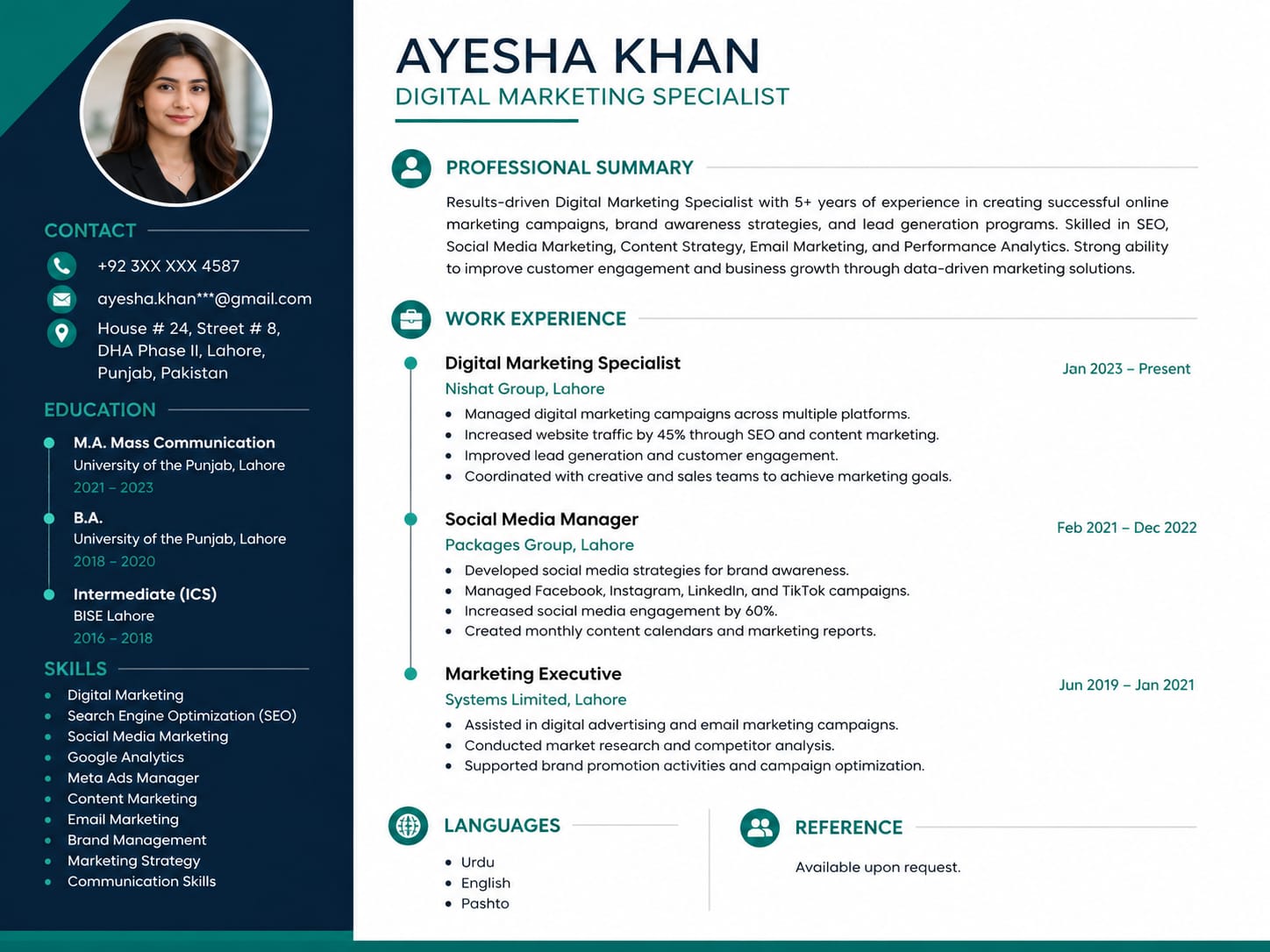
Writing an effective resume for career change requires shifting the focus from your past job titles to your underlying transferable skills and relevant achievements. By strategically reframing your work history and aligning your experience with your new target industry, you can convince hiring managers that your past background is an asset rather than a liability.
As a resume writer helping professionals across Pakistan, Dubai, and the broader Gulf region, I frequently work with clients who feel stuck because their previous title does not match their desired role. Whether you are transitioning from bank operations to tech project management in Karachi, or moving from hospitality sales to corporate HR in Dubai, the secret lies in showing employers how your core abilities directly solve their specific problems.
Why Traditional Chronological Resumes Fail During a Career Pivot
The standard reverse-chronological resume works exceptionally well when you are advancing along a predictable, linear path in the same industry. However, when you are changing fields entirely, leads with your most recent job title can instantly disqualify you in the eyes of an Applicant Tracking System (ATS) or an overworked recruiter who spends only six seconds reviewing your document.
If a recruiter in Dubai is hiring a Digital Marketing Specialist and your top entry says 'Senior Accountant,' their initial instinct is to set your application aside. They assume you lack the necessary technical expertise. To overcome this bias, your resume for career change must immediately highlight universal competencies—such as analytical thinking, budget management, team leadership, or client communication—before diving into past title details.
Choosing the Best Format: Why the Hybrid Structure Wins
Many job seekers mistakenly turn to a purely functional resume format, which groups experience into skill categories while completely hiding employment dates. Employers and recruiters generally dislike purely functional formats because they often signal an attempt to conceal employment gaps or lack of continuous experience.
Instead, I strongly recommend adopting a hybrid (or combination) resume structure. A hybrid resume begins with a robust Professional Summary and a structured Core Competencies section right at the top. This gives prime real estate to your transferable skills and target keywords. Below this strategic overview, you still provide a chronological work history, but you rewrite the achievement bullet points to emphasize skills that directly apply to your new domain.
How to Identify and Reframe Your Transferable Skills
Transferable skills are portable abilities that add immediate value regardless of your industry context. Identifying these starts with carefully analyzing 5 to 10 job descriptions in your new target field. Look for repeated action verbs, required competencies, and software tools, then match them against your historical background.
For instance, consider a client in Lahore who spent five years as a Customer Support Supervisor and wanted to switch into Scrum Product Ownership. Rather than focusing on daily ticket resolution rates, we reframed her experience around cross-functional stakeholder management, workflow optimization, user pain-point analysis, and team coaching. By changing the industry-specific jargon into universally recognized strategic terms, her resume for career change immediately resonated with tech hiring managers.
Your past title describes what you were called, but your transferable accomplishments prove what you are capable of achieving in a brand-new role.
Crafting a High-Impact Summary Statement for a Career Change
Your professional summary is the critical bridge connecting your past expertise to your future goals. Avoid passive statements like 'Looking for an entry-level position in marketing.' Instead, write a confident 3- to 4-line paragraph that explicitly explains your value proposition and intent.
Here is an example for a professional transitioning from corporate sales in Islamabad to supply chain management in UAE: 'Results-driven Sales Manager with over six years of experience managing complex client portfolios, vendor negotiations, and inventory forecasting across South Asian markets. Leveraging deep expertise in contract negotiation, cross-border logistics collaboration, and data-driven planning to drive efficiency as a Supply Chain Coordinator. Certified in Agile Operations.'
Adapting Your History for Pakistani and Gulf Employer Expectations
Recruiters in Pakistan and the GCC (Saudi Arabia, UAE, Qatar) often look for tangible business outcomes alongside formal credentials. When shifting industries, show continuous professional development. If you completed certifications from recognized institutions (such as Google Data Analytics, PMP, or AWS Solutions Architect), feature them prominently near the top of your resume.
Additionally, quantify your accomplishments wherever possible. Even if the project occurred in a completely different industry, metrics such as 'reduced process turnaround time by 25%' or 'managed a annual PKR 10 Million operational budget' demonstrate high capability, fiscal responsibility, and drive—traits that every employer values regardless of sector.
Career Change Resume Optimization Checklist
- Select a clear hybrid format that showcases skills first and work history second.
- Craft a compelling summary statement that explicitly bridges your old background to your new field.
- Incorporate ATS keywords taken directly from target job listings in your focus region.
- Translate legacy industry terminology into universal business and technical terms.
- Highlight certifications, bootcamps, and continuous education relevant to your new career path.
- Quantify achievements using metrics (percentages, revenue saved, time optimized) to build credibility.
Frequently Asked Questions
Should I include completely unrelated job experience on my career change resume? Yes, but tailor the bullet points carefully. Rather than detailing routine operational tasks that belong strictly to your old industry, focus on leadership, problem-solving, project organization, and client relations. If an older role offers no transferable value whatsoever, keep its entry brief to maintain a clean timeline without wasting precious space.
How do I pass ATS filters when my past job titles do not match the target role? You can address ATS filters by placing your target title in your profile header (e.g., 'Muhammad Ali | Aspiring Business Analyst') and integrating exact keywords from the job description throughout your skills and summary sections. Never fabricate past job titles, but feel free to add descriptive sub-titles in brackets if it clarifies your actual function.
Is a cover letter mandatory when switching careers? Absolutely. While your resume for career change structures your background strategically, a well-written cover letter provides the personal narrative. It gives you the space to explain *why* you are making the leap, how your unique perspective adds value to their company, and why your non-traditional background makes you a standout candidate.
If you are ready to make a successful pivot and need a high-converting resume for career change designed for Pakistani or global job markets, reach out to me directly at muhammadabdullah.online. Let us craft a customized, ATS-compliant application package that turns your diverse experience into your greatest competitive advantage.
Ready for resume writing?
See the full scope, process, and pricing — or book a project directly.
Explore Resume WritingMore Resume posts
7 ATS Resume Mistakes That Get You Rejected (And How to Fix Them)
Abdullah, a professional resume writer, breaks down the 7 most common ATS resume mistakes that get applicants filtered out before a recruiter ever reads the resume.
Read postHow to Write a Resume Summary That Gets Interviews (With Examples)
Abdullah shows you exactly how to write a resume summary that recruiters actually read — with real before/after examples for marketing, engineering, and finance roles.
Read post