Ultimate Guide to a Resume for Career Change in 2026
By Muhammad Abdullah · October 20, 2026
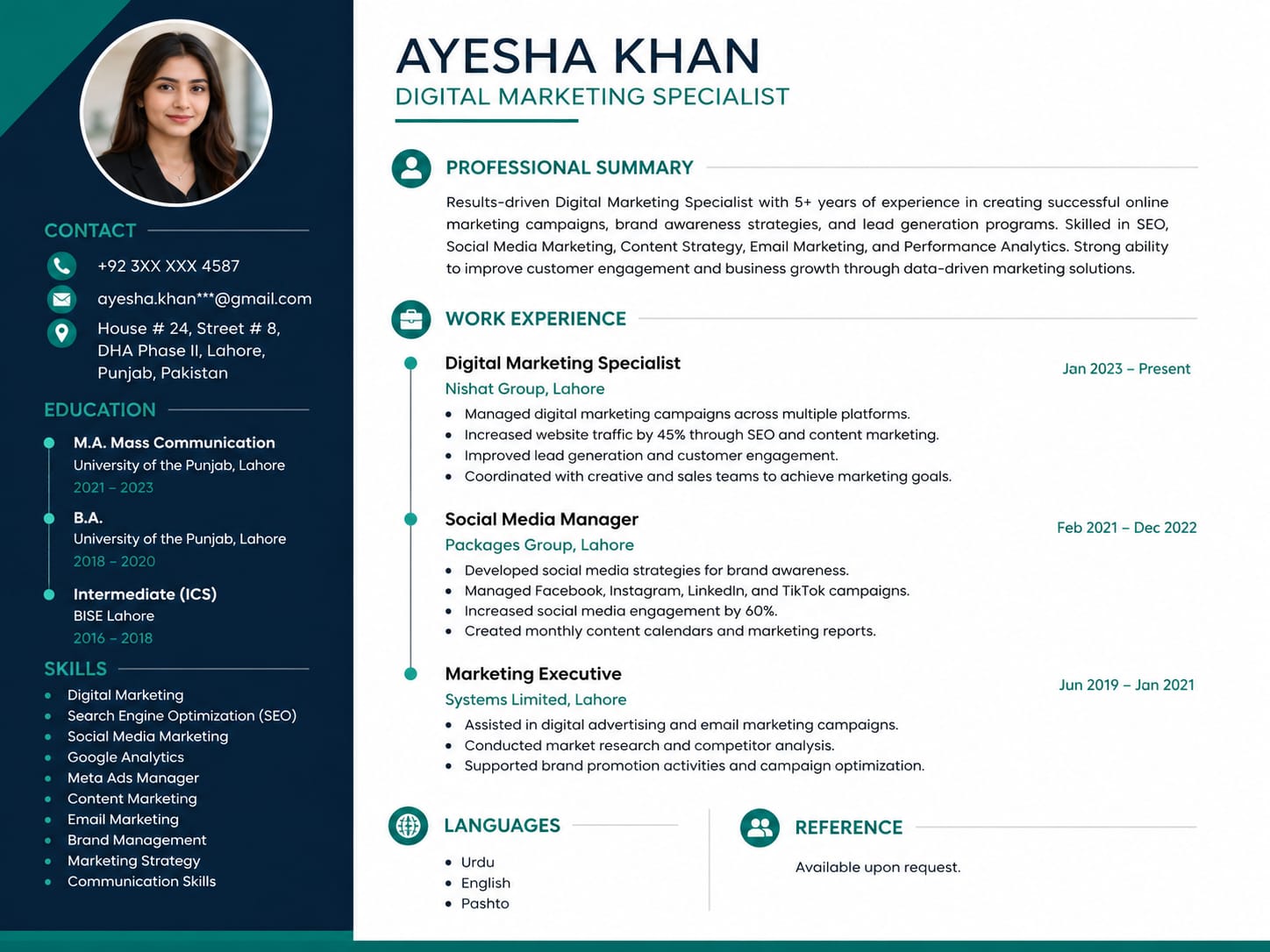
A resume for career change focuses on highlighting your transferable skills and relevant achievements rather than just listing your chronological work history in a single industry. To successfully pivot in 2026, your resume must bridge the gap between where you have been and where you want to go by demonstrating how your existing expertise solves the specific problems of your target role.
I have helped hundreds of professionals in Pakistan, the UAE, and beyond make the jump from one sector to another. Whether you are a banker in Karachi looking to enter the FinTech space or a retail manager in Dubai aiming for a corporate HR role, the strategy remains the same: you must stop writing for your past and start writing for your future. In this guide, I will walk you through the exact steps to build a resume that makes recruiters overlook your lack of industry-specific experience and focus on your potential value.
Why is a traditional resume format risky for career changers?
Most job seekers are accustomed to the reverse-chronological resume format. While this works perfectly if you are moving upward in the same industry, it can be a disadvantage when you are changing paths. If a hiring manager in a new field sees a list of job titles that seem irrelevant to their opening, they might discard your application within seconds. A traditional format emphasizes your 'where'—the companies and titles—rather than your 'how'—the skills and methodologies you use to get results.
In 2026, Applicant Tracking Systems (ATS) are more sophisticated than ever. If your resume is loaded with keywords from your old industry (e.g., 'supply chain logistics') but you are applying for a 'digital marketing' role, the software may filter you out before a human even sees your name. This is why a resume for career change requires a strategic shift toward a hybrid or functional layout that prioritizes capabilities over tenure.
Identifying and mapping your transferable skills
The secret to a successful career pivot is identifying your transferable skills. These are the core competencies you have developed that are valuable across multiple industries. For example, project management, team leadership, data analysis, and client relationship management are 'universal' skills. If you managed a team of 20 people in a manufacturing plant in Faisalabad, those leadership skills are equally applicable to managing a team in a software house in Lahore.
To identify these, look at the job description of your target role and highlight the key requirements. Then, look back at your career and find instances where you demonstrated those traits, even if the context was different. For instance, if you are moving from sales to project management, focus on your ability to meet deadlines, coordinate between departments, and manage budgets rather than just your sales quotas.
Choosing the best resume format for a career pivot
I generally recommend the 'Hybrid' or 'Combination' resume format for career changers. This format allows you to lead with a strong skills summary section followed by a condensed work history. Unlike a purely functional resume (which can sometimes look suspicious to recruiters), the hybrid format maintains the timeline of your career but gives the most prominent 'real estate' on the first page to your relevant expertise.
In the UAE and Gulf markets, recruiters often value stability but are increasingly open to diverse backgrounds if the candidate shows high adaptability. By using a hybrid format, you can showcase your 'Core Competencies' at the top, immediately telling the recruiter: 'I have what you need.' This is followed by your professional experience where you rephrase your bullet points to emphasize the skills that matter most to the new industry.
How to write a compelling career change summary?
Your resume summary is your elevator pitch. For a career changer, this section is non-negotiable. It should be 3-4 lines long and explicitly state your transition. A common mistake is being too vague. Instead of saying 'Seeking a new challenge in a different field,' try something more targeted.
Example: 'Dynamic Sales Professional with 8+ years of experience in the Pakistani pharmaceutical sector, now transitioning into UX Design. Expert in user behavior analysis and cross-functional collaboration, with a proven track record of increasing client engagement by 40%. Recently certified in Google UX Design with a portfolio of high-converting mobile prototypes.'
This summary works because it acknowledges the past but immediately pivots to the new value proposition. It mentions a specific achievement (40% engagement) and a new qualification, which builds instant credibility in the eyes of the hiring manager.
Practical steps to build your new resume
Step 1: Deconstruct the Target Job. Copy-paste three job descriptions for your dream role into a word cloud or AI tool to find the most common keywords. These are the words that must appear on your new resume.
Step 2: Rebrand Your Job Titles (Ethically). If your official title was 'Administrative Assistant' but you spent 70% of your time on social media management and are now applying for marketing roles, you can use a descriptive title like 'Administrative Assistant (Marketing & Social Media Support)'. This helps both the ATS and the recruiter see the relevance.
Step 3: Focus on Achievements, Not Tasks. Don't just list what you did; list what you achieved. Instead of 'Managed accounts,' say 'Managed a portfolio of 50+ clients, maintaining a 95% retention rate.' Retention and client management are valuable in almost any professional role.
Checklist for a successful career transition resume
- Does the summary clearly state the transition and the value you bring?
- Are the top 5 skills in your 'Core Competencies' section aligned with the new job description?
- Have you removed industry-specific jargon from your old field that might confuse a new recruiter?
- Did you include any relevant certifications, online courses (Coursera, LinkedIn Learning), or bootcamps?
- Is the resume optimized for ATS with standard fonts and clear headings?
- Have you quantified your achievements using numbers, percentages, or currency (PKR/AED/USD)?
- Is the total length kept to 1-2 pages maximum?
Frequently Asked Questions
Should I include my old job titles if they are completely different? Yes, you should never hide your work history, as this creates gaps that look like red flags. The key is to keep the descriptions of those old roles brief and focused entirely on the skills that translate to your new path. If you were a chef and want to be a customer service lead, emphasize your experience in high-pressure environments and conflict resolution with customers.
How do I handle a lack of direct experience on my resume? You can compensate for a lack of direct experience by adding a 'Projects' section or a 'Volunteer Experience' section. If you are moving into Shopify development, for example, list the stores you built for friends or your own practice projects. In the 2026 job market, demonstrated skill often carries as much weight as years of tenure, especially in technical and creative fields.
Is a cover letter necessary for a resume for career change? Absolutely. While some people think cover letters are dead, they are vital for career changers. The cover letter is where you can tell the story that the resume cannot. You can explain *why* you are making the switch and why your unique background makes you a more 'out-of-the-box' thinker than a candidate who has followed a traditional path.
Making a career shift is a bold move, but with a professionally crafted resume for career change, you can open doors that previously seemed locked. If you are struggling to translate your Pakistani or international experience into a new field, I am here to help. As an expert resume writer and Shopify professional, I understand how to position candidates for success in modern, competitive markets. Contact me today through muhammadabdullah.online, and let’s build a resume that gets you the interview you deserve.
Ready for resume writing?
See the full scope, process, and pricing — or book a project directly.
Explore Resume WritingMore Resume posts
7 ATS Resume Mistakes That Get You Rejected (And How to Fix Them)
Abdullah, a professional resume writer, breaks down the 7 most common ATS resume mistakes that get applicants filtered out before a recruiter ever reads the resume.
Read postHow to Write a Resume Summary That Gets Interviews (With Examples)
Abdullah shows you exactly how to write a resume summary that recruiters actually read — with real before/after examples for marketing, engineering, and finance roles.
Read post