CV vs Resume Difference: 2026 Guide for Job Seekers
By Muhammad Abdullah · October 8, 2026
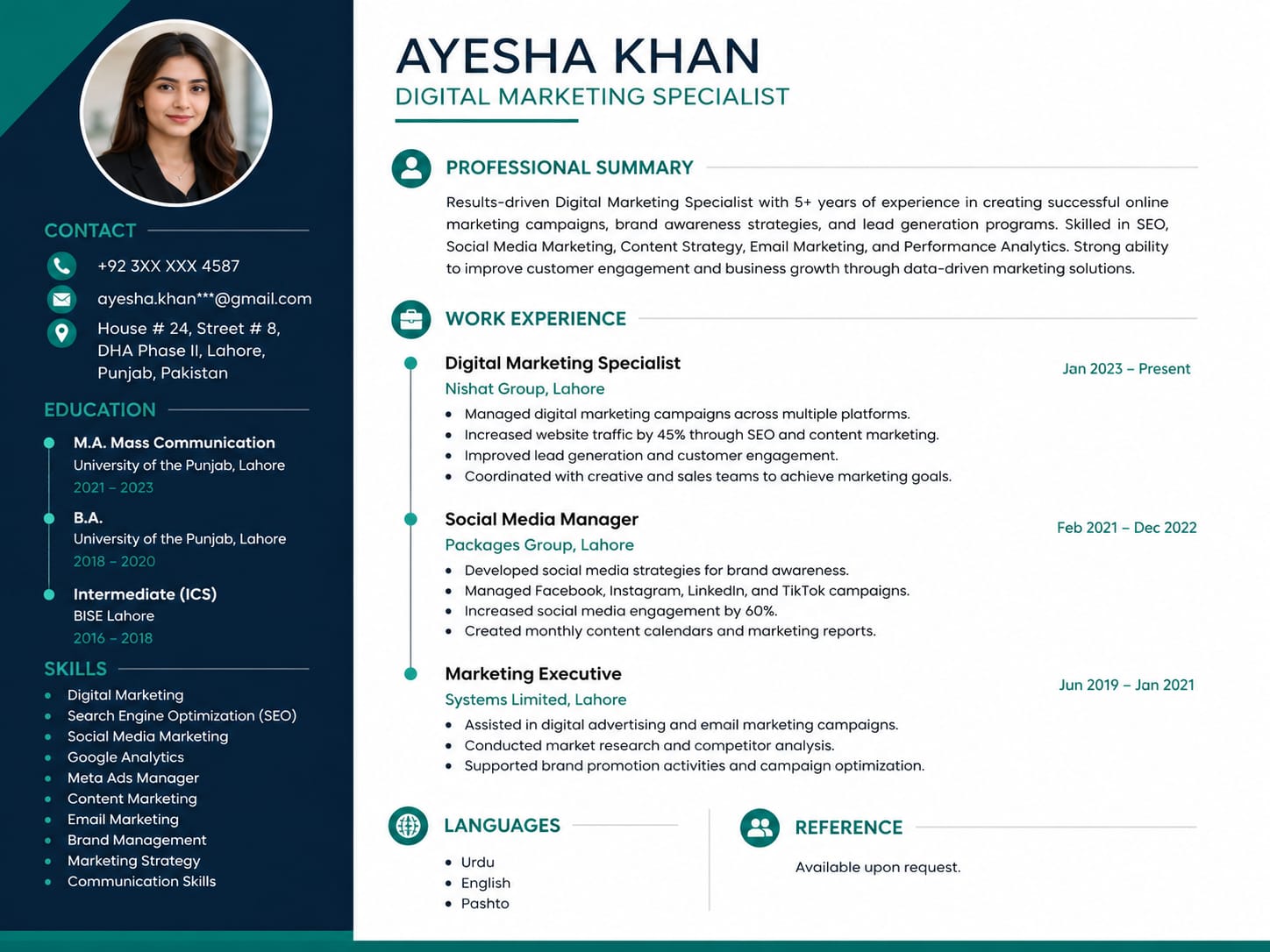
The primary CV vs resume difference lies in the length, layout, and intended purpose of the document. A CV (Curriculum Vitae) is a comprehensive, multi-page record of your entire academic and professional history, whereas a resume is a concise, one-to-two-page summary of your most relevant skills and experiences tailored to a specific job description.
As we navigate the job market in 2026, the distinction between these two documents has become even more critical. With the rise of advanced Applicant Tracking Systems (ATS) and the increasing globalization of the workforce in Pakistan and the UAE, choosing the wrong format can lead to your application being discarded before a human even sees it. In my years of experience as a professional resume writer and Shopify expert, I have seen how a clear understanding of these nuances can be the difference between a generic rejection and a high-paying job offer.
What is the main CV vs resume difference?
To understand the CV vs resume difference, we must look at their origins. 'Curriculum Vitae' is Latin for 'course of life,' which explains why it is a living document that grows as you achieve more. It includes every certification, publication, award, and job you have ever held. On the other hand, 'Resume' is French for 'summary.' Its goal is not to show everything you have done, but to show why you are the perfect fit for the specific role you are applying for today.
In 2026, the resume has become the standard for most corporate and private-sector jobs in North America and much of Europe. However, in Pakistan and many Middle Eastern countries like the UAE and Saudi Arabia, the terms are often used interchangeably. Despite this linguistic overlap, the structural expectations remain distinct. If you are applying for a management role at a tech firm in Dubai, they expect a punchy, two-page resume. If you are applying for a teaching position at a university in Lahore, they will likely demand a full CV.
When should you use a CV instead of a resume?
Deciding which format to use depends heavily on the industry and the geographical location of the employer. You should use a CV when applying for academic positions, scientific research roles, medical fellowships, or grants. In these fields, the depth of your research and the breadth of your publications are more important than a brief summary of your work history.
Furthermore, if you are looking for work in the United Kingdom, Ireland, or New Zealand, the term 'CV' is the standard for all job applications, though the format requested is often closer to a 'short CV' (which is essentially a two-page resume). For my clients in Pakistan and the Gulf region, I always advise checking the job posting carefully. If the employer is a multinational corporation (MNC) with headquarters in the US, stick to a resume. If it is a local government entity or an educational institution, a detailed CV is usually the safer bet.
Key components of a professional CV in 2026
A modern CV is not just a list; it is a chronological narrative of your professional growth. In 2026, a high-quality CV should include your full contact information, a professional summary or research objective, and a detailed education section including thesis titles. Following this, you should list your professional experience in reverse-chronological order, ensuring that you include specific technical skills and methodologies used.
Don't forget the 'extras' that make a CV unique. This includes publications, presentations, professional memberships, honors, and even relevant volunteer work. Because length is not a primary concern for a CV, you have the space to explain the impact of your research or the scope of your academic contributions in detail. For Pakistani researchers aiming for international fellowships, this detail is non-negotiable.
Essential elements of a modern resume
A resume in 2026 must be a high-conversion marketing tool. Much like the Shopify stores I design for my ecommerce clients, a resume needs to grab attention immediately and lead the 'buyer' (the recruiter) to the 'checkout' (the interview). It should be focused, results-oriented, and strictly 1-2 pages long. You must highlight your accomplishments using quantifiable metrics—for example, 'Increased sales by 30% within 6 months' rather than 'Responsible for sales.'
The structure should include a header, a powerful professional profile, a core competencies section (rich with keywords), professional experience, and education. In the competitive UAE market, where recruiters spend less than six seconds on the first pass, your resume must be formatted for readability. Use bullet points, clear headings, and plenty of white space. Avoid outdated sections like 'References available upon request' or overly personal information like your date of birth or marital status, unless specifically required by the local law.
Regional preferences: Pakistan, UAE, and the Global Market
Understanding the regional context is vital. In Pakistan, many traditional companies still prefer a 'Bio-data' style or a long-form CV that includes a photograph and personal details. However, the top-tier firms in Karachi and Islamabad are shifting toward international resume standards. If you are a fresh graduate in Pakistan, I recommend having both: a detailed CV for academic pursuits and a streamlined resume for corporate job hunts.
In the UAE and the broader Gulf region, the market is incredibly diverse. If you are applying to a local firm, they might appreciate a bit more detail about your background. However, for the majority of roles in Dubai's thriving tech and finance sectors, a crisp, ATS-optimized resume is the gold standard. As an expert who helps clients globally, I’ve noticed that Gulf-based recruiters are increasingly looking for 'Western-style' resumes that focus on impact rather than just tenure.
Checklist for your 2026 job application
- Determine the target: Is it academic (CV) or corporate (Resume)?
- Check the page count: Resumes should be 1-2 pages; CVs can be 3+.
- Optimize for ATS: Use keywords found in the job description naturally.
- Quantify achievements: Use percentages, currency, and timeframes.
- Proofread: Ensure there are no typos in your contact information or headers.
- Tailor every time: Never send the same resume to two different job postings.
- Format for 2026: Use modern, sans-serif fonts and avoid heavy graphics that confuse scanners.
Frequently Asked Questions
Question: Can I use a CV for a corporate job in Dubai? Answer: While many people in Dubai use the word 'CV' to refer to their application, they usually mean a professional resume. Unless you are in a specialized field like medicine or academia, keep your document to two pages and focus on professional achievements rather than your entire history.
Question: Is a photo required on a resume in 2026? Answer: In most Western markets (US, UK, Canada), photos are a strict 'no' to avoid bias. In Pakistan and the UAE, photos are still common but are becoming optional. My professional advice is to omit the photo unless the job specifically asks for it, as it saves space for your actual skills and results.
Question: How far back should my professional experience go? Answer: For a resume, focus on the last 10 to 15 years. Anything older is usually irrelevant unless it is your only experience in a specific niche. For a CV, you should include your entire history, but you can summarize older, less relevant roles to keep the reader engaged.
Navigating the CV vs resume difference is the first step toward a successful career move in 2026. Whether you are a Shopify developer looking for a remote role or a manager in Dubai aiming for the C-suite, your documentation must be flawless. If you need expert help crafting a document that stands out in the Pakistani or international market, feel free to reach out to me at muhammadabdullah.online. I specialize in creating high-impact resumes and CVs that get you noticed by the world's top employers.
Ready for resume writing?
See the full scope, process, and pricing — or book a project directly.
Explore Resume WritingMore Resume posts
7 ATS Resume Mistakes That Get You Rejected (And How to Fix Them)
Abdullah, a professional resume writer, breaks down the 7 most common ATS resume mistakes that get applicants filtered out before a recruiter ever reads the resume.
Read postHow to Write a Resume Summary That Gets Interviews (With Examples)
Abdullah shows you exactly how to write a resume summary that recruiters actually read — with real before/after examples for marketing, engineering, and finance roles.
Read post